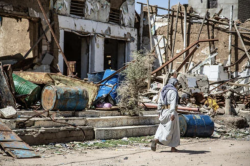
Yemen’s Overlooked Crisis Goes Beyond the Houthis

- 2025-12-19
- 04:28:11
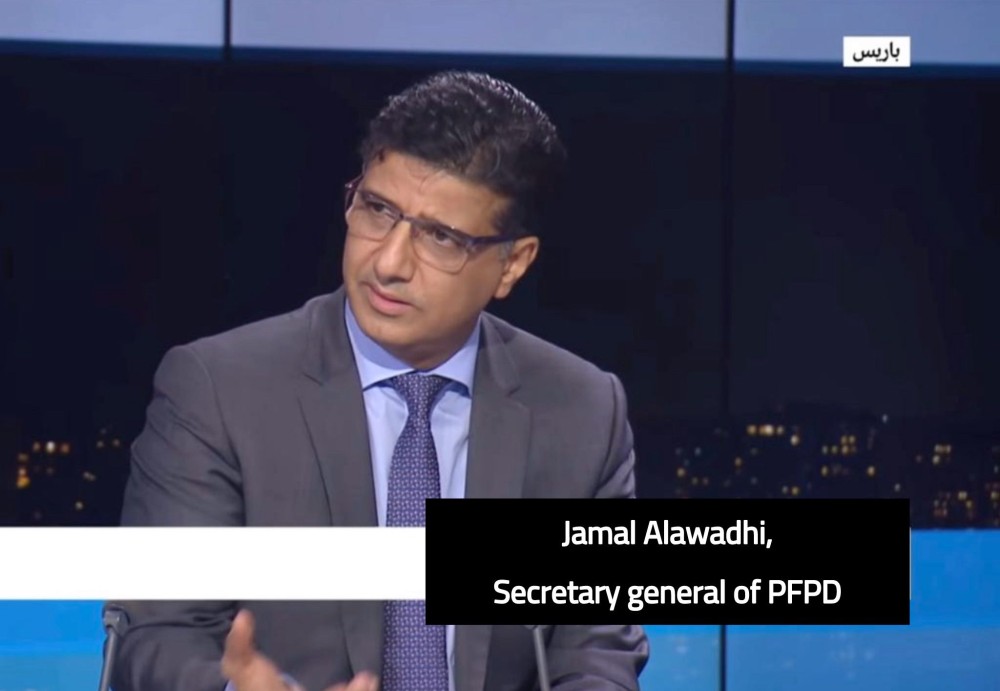


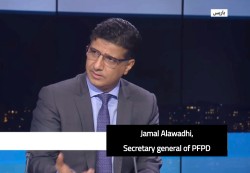
By Jamal Al-Awadhi
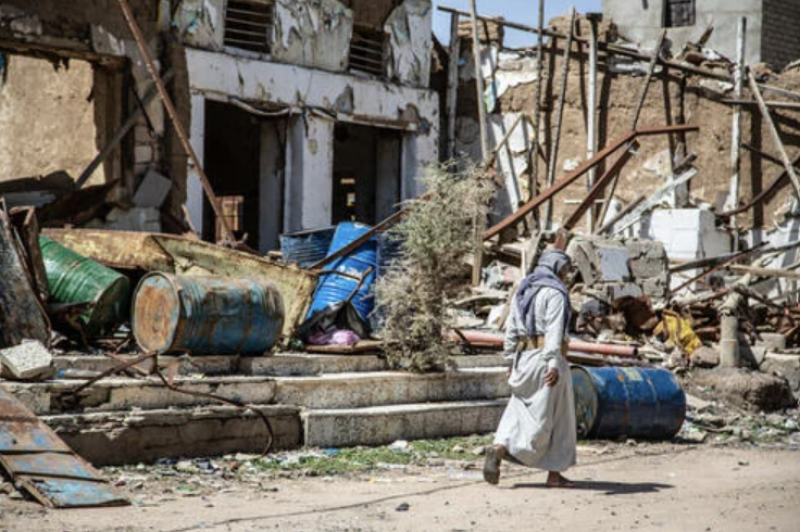
For years, Yemen has been treated by the international community as a marginal conflict an unfortunate humanitarian tragedy rather than a central security challenge. A recent Foreign Affairs article rightly warns that Yemen represents one of the Middle East’s most overlooked threats, particularly due to the growing military and regional reach of the Houthi movement. But focusing on the Houthis alone misses a deeper and more dangerous reality: Yemen is trapped between two forms of extremism, and the world continues to underestimate both.
The Houthis have undeniably transformed from a local insurgent group into a regional actor with the ability to disrupt international shipping in the Red Sea and the Bab al-Mandab Strait. Their attacks on commercial and military vessels have linked Yemen’s war directly to global trade, energy security, and international maritime law. Treating this threat as a temporary by-product of the Gaza war or a purely Yemeni issue is a strategic mistake.
Yet the Houthis are only one side of Yemen’s destabilizing equation.
The other, often ignored, threat lies in the persistent empowerment of political Islam under the banner of legitimacy most notably through Yemen’s Islah Party, the local branch of the Muslim Brotherhood. For more than a decade, Islah has benefited from state collapse, war, and international ambiguity, embedding itself within government institutions, the military, and the security sector in areas supposedly under the authority of the internationally recognized government.
This has had serious consequences for counterterrorism efforts.
Numerous regional and security assessments have documented the blurred lines between elements affiliated with Islah and extremist groups such as Al-Qaeda in the Arabian Peninsula (AQAP). While Islah presents itself internationally as a “moderate” political actor, on the ground it has repeatedly tolerated or tactically leveraged radical networks when it suited its political and military interests. This pattern mirrors the broader Muslim Brotherhood strategy: maintaining a respectable political façade while enabling or exploiting violence through informal alliances.
The result is a deeply flawed international approach to Yemen.
Western and international actors have shown increasing willingness to confront the Houthis as a security threat, yet they continue to overlook the role of Sunni political Islam in reproducing instability and extremism. This selective vision undermines any credible war on terrorism in Yemen. One cannot fight extremist violence while simultaneously empowering ideological structures that normalize it, shelter it, or recycle it under political cover.
Yemen today is not merely a battlefield between a government and rebels. It is a fragmented arena where sectarian militancy on one side and ideological extremism on the other compete over a collapsed state. As long as international policy treats one form of extremism as acceptable or “less dangerous” the conflict will persist, and terrorism will continue to adapt.
If Yemen is truly to be stabilized, the international community must abandon its double standards. The Houthis must be confronted as a regional security threat, not accommodated as a local authority. At the same time, political Islam particularly the Muslim Brotherhood’s Yemeni branch must be recognized as part of the problem, not a temporary partner in the name of legitimacy.
Failing to address both sides of Yemen’s extremist landscape does not preserve stability; it postpones the next crisis. And that crisis, as the Red Sea has already shown, will not remain confined within Yemen’s borders.


By Jamal Al-Awadhi For years, Yemen has been treated by the international community as a marginal conflict an unfortunate…
AbuDhabi -- The U.S. State Department announced Thursday that Secretary of State Marco Rubio held a phone call with UAE Foreign Minister Sheikh Abd…
Baghdad — The Iraqi government announced the dismissal of several officials following controversy over the inclusion of Lebanon’s Hezbo…