STC chief says Sanaa is 'next target' after taking control of Yemen's south

- 2025-12-11
- 00:25:08
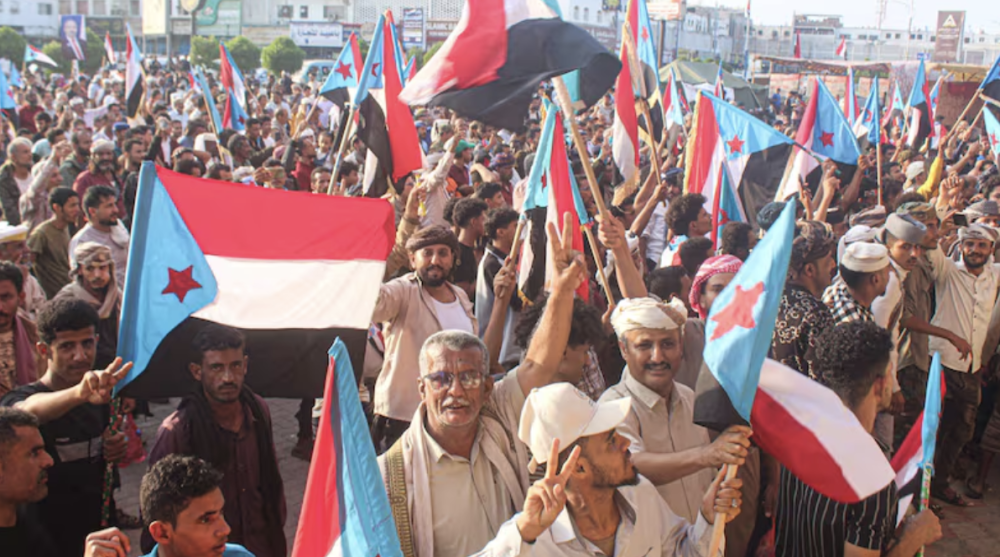


Aden -- Military manoeuvres in the south of Yemen are the “cornerstone” for any attempt to liberate northern Yemen from Houthi control, Aidarous Al Zubaidi, president of the Southern Transitional Council (STC), said on Wednesday.
Meanwhile, a visiting Saudi delegation called for de-escalation and announced an agreement with the STC on measures to stabilise the situation. But it nevertheless urged southern forces to withdraw from the two provinces they recently seized from other pro-government units, Yemeni official media said.
Mr Al Zubaidi was speaking after the STC announced it had taken control of Hadhramaut and Mahra, effectively controlling all southern provinces. An STC official said the move came after what he described as the failure of other pro-government factions and Yemen's Presidential Leadership Council (PLC) “to launch” any serious campaign to push the Houthis from their northern strongholds, including Sanaa.
Deep rifts in Yemen’s ruling body as STC says it now controls entire south
Deep rifts in Yemen’s ruling body as STC says it now controls entire south
"Security and military stability achieved in the south is not an end in itself but the essential foundation for a serious campaign to free the north," affirmed Mr Al Zubaidi, who is also the vice president of the PLC, in remarks during meetings with local officials.
He said the “era of side battles is over,” claiming the supply lines that once fed the Iran-backed Houthis from the south have been severed. The next target, he insisted, must be Sanaa, “through peace or war”, until legitimate authority is restored and the rebels are defeated.
Mr Al Zubaidi stressed that the STC forces are acting out of shared responsibility with the Saudi-led coalition, adding that the region is now “more loyal, stronger and better prepared” than in 2015 to serve as the "spearhead of the Arab effort to cut Iran’s influence and end Houthi threats to international shipping and neighbouring states".
Mohammed Al Qahtani, who headed a Saudi delegation during a visit to Hadhramaut, said that the kingdom "demands that all the military forces affiliated with the Southern Transitional Council in the two provinces of Hadhramaut and Mahra withdraw and return to their camps and bases", according to Yemen's state news agency Saba.
He added that a set of measures had been agreed upon by all parties, including the STC, to stabilise the situation.
He also announced that an initial agreement had been reached with local authorities and allied tribes in Hadhramaut to ensure the continued flow of oil production in the PetroMasila field, and keep oilfields out of the conflict by putting them under the direct supervision of the local authority.
The STC has been an important part of the coalition fighting alongside the internationally recognised government against the Houthis, which hold Yemen's capital Sanaa and the heavily populated north-west.
Yemen, situated between Saudi Arabia and an important shipping route on the Red Sea, was split into northern and southern states until 1990. STC describes independence as an aspiration of all southerners.
The Houthis captured Sanaa in late 2014, and the interim government fled south in 2015 with the Saudi-led coalition intervening against the Houthis.


Washington – The United States has voiced concern over recent developments in southeastern Yemen, stressing the importance of avoiding any st…
Riyadh --  Yemen’s Presidential Leadership Council Chairman, Rashad al-Alimi, announced on Tuesday a nationwide state of emergency, effe…
 Mukalla – The Saudi-led Arab Coalition has requested the immediate evacuation of civilians from Mukalla Port in Hadramout province.&nbs…